Tuesday, June 18, 2013

[Naxalite Maoist India] Red Ant Dream - Maati ke lal - Gondi Internationale

Maati Ke Lala - http://redantdream.com

https://www.facebook.com/redantdreamdocumentary

Gondi Internationale


Upcoming Screenings :

Pune
17 June 2013 (Monday)
National Film Archive of India
FAC Screening, NFAI Law College Road, Pune 411004

Bangalore
19-22 July 2013
details to be announced

Hyderabad
July 2013
details to be announced


--
Posted By Blogger to Naxalite Maoist India at 6/18/2013 11:11:00 PM

[Naxalite Maoist India] Al-Jazeera - How will India respond to Maoist rebels?


To discuss this, Inside Story, with presenter Hazem Sika, is joined by guests: Ashok Mehta, a retired Indian army general; Rani Singh, a South Asia security analyst; and Kishalay Bhattacharjee, a journalist and specialist on the Maoist rebel movement.


Link to Video :
http://www.youtube.com/watch?v=_Po9qOednk4

 The Indian government is preparing for an all-out anti-Maoist offensive following attacks last Saturday, in which several top Congress Party leaders were killed in Bastar. At least 19 people were killed when a convoy was ambushed in a dense forest, and the Maoists, also known as Naxals or Naxalites, are threatening to carry out more attacks. The Maoists are inspired by the communist ideology of China's late Chairman Mao Zedong.

They have been fighting India's federal and provincial governments for more than four decades, demanding land and jobs for the poor and often marginalised farmers. So, while the Indian government tries to put down an insurgency it considers to be its greatest internal security threat, we ask: Is a military response the only option? And what will this mean for the world's biggest democracy?


--
Posted By Blogger to Naxalite Maoist India at 6/18/2013 11:05:00 PM

[Naxalite Maoist India] 3D-printed guns may be impossible to stop - Homeland Security bulletin

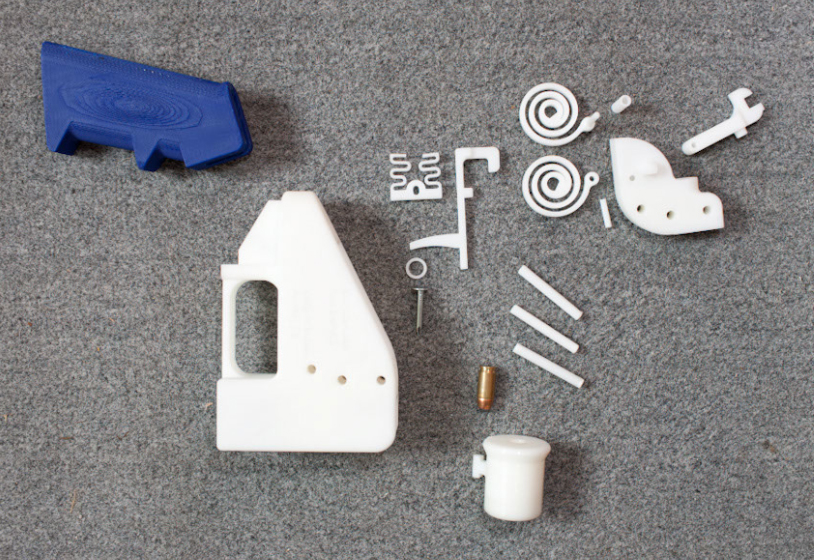
A new Department of Homeland Security intelligence bulletin warns it could be "impossible" to stop 3D-printed guns from being made, not to mention getting past security checkpoints.

3D Printed Guns

A May 21 bulletin distributed to numerous state and federal law enforcement agencies and obtained by FoxNews.com states that the guns, which can be made by downloading blueprints into cutting edge computers that mold three-dimensional items from melted plastic, "poses public safety risks" and are likely beyond the current reach of regulators. The guns threaten to render 3D gun control efforts useless if their manufacture becomes more widespread.

"Significant advances in three-dimensional (3D) printing capabilities, availability of free digital 3D printer files for firearms components, and difficulty regulating file sharing may present public safety risks from unqualified gun seekers who obtain or manufacture 3D printed guns," warns the bulletin compiled by the Joint Regional Intelligence Center.

The bulletin refers specifically to Defense Distributed, a nonprofit company started by a University of Texas law student, which has successfully made and fired a 3D gun whose only metal parts are the bullets and a small firing pin. Some 100,000 plans for a gun called "The Liberator" were downloaded in just a few days before May 3, when a branch of the U.S. State Department told it to stop sharing the file. But the government bulletin seems to acknowledge that the genie is out of the bottle.

A source tells FoxNews.com the potential problems faced by government authorities involve securing large, high-profile events or those attended by the President, where magnetometers used to screen for weapons would not pick up a 3D printed gun.

"This is a serious threat," the law enforcement source said. "These could defeat magnetometers. The only security procedure to catch [the 3D firearms] is a pat down. Is America ready for pat-downs at every event?"

In a section called "Liberator design poses Public Safety Risks," the bulletin explains:
"Magnetometers may fail to detect the Liberator, depending on device sensitivity. Though it is prohibited by federal law, manufacturers may deliberately omit the unnecessary metal insert, leaving only a small nail and ammunition as the sole metal component. Future designs could further reduce or eliminate metal entirely.
"Unqualified gun seekers may be able to acquire or manufacture their own Liberators with no background checks."

Other concerns mentioned in the bulletin include: that 3D-printed firearms can be made without serial numbers or unique identifiers, hindering ballistics testing. And improvements in technology and decreasing 3D printer costs are likely to mean even more sophisticated printed guns will become easier to acquire.

"Proposed legislation to ban 3D printing of weapons may deter, but cannot completely prevent their production," the memo says. "Even if the practice is prohibited by new legislation, online distribution of these digital files will be as difficult to control as any other illegally traded music, movie or software files."

Source : 
http://www.foxnews.com/us/2013/05/23/govt-memo-warns-3d-printed-guns-may-be-impossible-to-stop/#ixzz2WaX3yrp1


--
Posted By Blogger to Naxalite Maoist India at 6/18/2013 10:26:00 PM

Tuesday, May 28, 2013

[Naxalite Maoist India] Mahendra Karma's Annihilation - CPI Maoist statement

Elimination of fascist Salwa Judum leader Mahendra Karma: Legitimate response to the inhuman atrocities, brutal murders and endless terror perpetrated on the Adivasis of Bastar!
Attack on top Congress leaders: Inevitable reprisal to the fascist Operation Green Hunt being carried on by the UPA government hand in glove with various state governments!

On May 25, 2013, a detachment of the People's Liberation Guerilla Army conducted a massive attack on the 20 plus vehicles convoy of Congress party which resulted in wiping out of at least 27 Congress leaders, activists and policemen including Mahendra Karma, the bitter enemy of the oppressed people of Bastar and Nand Kumar Patel, president of the Congress' state unit. It took place when the Congress party leaders were touring in Bastar region as part of their 'Parivartan Yatra' program (i.e. March of Change) keeping their eye on forthcoming assembly elections. At least 30 others also were injured in this attack including ex-central minister and veteran Congress leader Vidya Charan Shukla. The dog's death of Mahendra Karma, notorious tyrant, murderer, rapist, robber and maligned as corrupt, in this historic attack has created a festive atmosphere in entire Bastar region. Former state home minister Nand Kumar Patel was also had the history of suppressing the people. It was in his tenure, paramilitary force (CRPF) was deployed in Bastar region for the first time. It was also not hidden from anyone that the former central minister VC Shukla who had been in various portfolios including Home ministry, was also a people's enemy who had acted as a loyal servant of imperialists, comprador bureaucratic bourgeoisie and landlords and had played a key role in formulating and implementing exploitative government policies. 
The goal of this attack was mainly to eliminate Mahendra Karma and some other reactionary Congress top leaders as well. However, during this massive attack some innocent people and some lower level Congress party activists who were in fact not our enemies, were also killed and injured caught in the two-hour long gun battle that ensued between our guerrilla forces and the armed police forces. Dandakaranya Special Zonal Committee of Communist Party of India (Maoist) regrets for this and expresses condolence and sympathy to the families of the bereaved.
Dandakaranya Special Zonal Committee of Communist Party of India (Maoist) takes absolute responsibility for this attack. We send our revolutionary greetings to the PLGA commanders who led this daring ambush, to the red fighters who contributed in this success, to the people who took part in it by lending active support and to the entire revolutionary masses of Bastar region. This attack has once again proved the historic fact that those fascists who perpetrate violence, atrocities and massacres on the people, will never be forgiven and they would inevitably be punished by the people.
The so-called tribal leader Mahendra Karma was born into a feudal manjhi family. Both his grandfather Masa Karma and father Bodda Manjhi were notorious harassers of the people in their times and were acted as trusted agents of colonial rulers. His family's entire history is known of inhuman exploitation and oppression of Adivasis. Mahendra Karma's political life was started in 1975 as a member of AISF while he was studying the law. He was elected as MLA from CPI first in 1978. Later in 1981, when he was denied ticket by CPI, he joined Congress. In 1996, he had gone with a breakaway faction of Madhavrao Scindhia and became member of Indian Parliament as an independent candidate. Later he rejoined the Congress party.
In 1996, a massive movement took place in Bastar demanding the implementation of Sixth Schedule. Though mainly CPI had led that movement, our party – it was CPI (ML) [People's War] then – also took active part in that movement mobilizing the masses on a large scale. But Mahendra Karma took bitter stand against that movement proving himself as representative of the selfish urban business people, who had come to Bastar as settlers and had accumulated massive wealth. Then only his anti-adivasi and pro-comprador nature was clearly exposed before the people. Since the 1980s, he had strengthened the bonds with big business and capitalist classes in Bastar.
Then in 1999, Karma's name was exposed in a big scam called 'Malik Makbuja'. A Lokayukta report revealed that in the period of 1992-96, Mahendra Karma hand in glove with timber black-marketers had made millions of rupees by cheating adivasi people and colluding with revenue and forest officials and the district collector. Though a CBI probe was ordered into this scam, nothing harm was done to the culprits as always happen.
Mahendra Karma was minister of jails in undivided Madhya Pradesh. Later became industries and commerce minister in Ajit Jogi's government when Chhattisgarh state was carved out of it.  At that time a forceful land acquisition took place in Nagarnar for the proposed steel plant by Romelt/NMDC. While the local people refused to give up their lands, Mahendra Karma took stand against the people and in favor of the capitalists. He played a key role in forcibly taking away the lands by suppressing the people with support of brutal police force. The people who lost their lands in Nagarnar received neither compensation nor the employment as government had promised till now. They were forced to disperse.
From the very beginning, Mahendra Karma stood as an arch enemy of the revolutionary movement. The reason is clear – hailed from a typical feudal family and 'grown up' as an agent of big business and bourgeois classes. The first Jan Jagaran ('awareness') campaign was launched in 1990-91 against the revolutionary movement. The revisionist CPI had participated in that counter-revolutionary campaign. Karma and many of his relatives belonged to the landlord classes had actively participated in it. The second Jan Jagaran campaign was launched in 1997-98 led by Mahendra Karma himself. This was started in Mahendra Karma's own village Faraspal and its surrounding villages and spread up to Bhairamgarh and Kutru areas. Hundreds of people were tortured and arrested and sent to jails. Many an incidents of looting and setting fire to houses took place. Womenfolk were raped. However, under the leadership of our party and mass organizations people came together and strongly countered this counter-revolutionary onslaught. Within a short time, this campaign was defeated.
Later the revolutionary movement became more consolidated. Anti-feudal struggles were intensified in many areas. Landlords like Podia Patel, the brother of Mahendra Karma, and some close relatives of him were killed as part of mass resistance actions. In many villages the power of feudal forces and bad gentry was thrown out and the process of establishment of People's Revolutionary Power organs began. The feudal forces including Mahendra Karma were very furious as their lands were redistributed among the poor and landless peasants and the customs like unjustly forcing the people to pay penalties to the landlords were stopped. They opposed the progressive changes like stopping of forced marriages of women, discouraging polygamy etc. also. And at the same time, the revolutionary movement was seemed as a hurdle by the corporate houses like Tatas and Essars who started their attempts to plunder away the natural resources of Bastar region. So, they naturally colluded with the counter-revolutionary elements like Mahendra Karma. They fed him with millions of coffers in order to create conducive atmosphere for their arbitrary depredations. On the other hand, after the emergence of CPI (Maoist) as a country-wide consolidated party as an outcome of the merger between the genuine revolutionary organizations, exploitative ruling classes intensified their counter-revolutionary onslaught in the guidance of the imperialists so as to crush the revolutionary movement. Thus, a brutal attack in connivance with the Congress and the BJP has started in Bastar region namely 'Salwa Judum'. So many followers and relatives of Mahendra Karma like Soyam Muka, Rambhuvan Kushwaha, Ajay Singh, Vikram Mandavi, Gannu Patel, Madhukarrao, and Gota Chinna etc. emerged as key leaders of Salwa Judum.
One can hardly find any examples in the history to compare the severity of the devastation and barbarity caused by Salwa Judum to the lives of the Bastar people. It killed more than one thousand people in cold blood; torched 640 villages into ashes, robbed thousands of houses; ate or took away chickens, goats, pigs, etc.; forced more than two million people to be displaced; dragged more than 50 thousand people into state-run 'relief' camps. Thus the Salwa Judum became anathema to the people. Hundreds of women were gang raped. Many women were murdered after rape. Massacres took place in many places. The atrocities perpetrated on the people and havoc created by the hooligans of Salwa Judum, the police and paramilitary forces, especially the Naga and Mizo battalions crossed all limits. There were several incidents in which people were brutally cut into pieces before being dumped in rivers. Cherli, Kotrapal, Mankeli, Karremarka, Mosla, Munder, Padeda, Paralnar, Pumbad, Gaganpalli... in many villages people were killed en masse. Hundreds of tribal youth were recruited as SPOs and were turned into hardened criminals. Mahendra Karma himself led the attacks on several villages in the name of conducting meetings and marches. Many women were raped by the goons with the direct instigation of Mahendra Karma. He was directly involved in many incidents of burning the villages, torturing and murdering the people. Thus, in the minds of the people of Bastar, Mahendra Karma remained as an inhuman killer, rapist, dacoit and a loyal broker of the big capitalists. In entire Bastar people have been demanding our party and the PLGA for many years that he must be punished. Many of them came forward voluntarily to give active support in this task. There were also a few attempts, but due to petty mistakes and other reasons he was able to escape.
With this action we have taken revenge of over a thousand adivasis who were brutally murdered in the hands of Salwa Judum goons and government armed forces. We also have taken revenge on behalf of those hundreds of mothers and sisters who were subjected to cruelest forms of violence, humiliation and sexual assault. We have taken revenge on behalf of the thousands of Bastarites who lost their homes, cattle, chickens, goats, bald, pottery, clothing, grain, crops ... everything and were forced to live a miserable life in subhuman conditions.
Immediately after this attack, Prime Minister Manmohan Singh, UPA Chairperson Sonia Gandhi, Chhattisgarh Chief Minister Raman Singh etc. dubbed this as an attack on democracy and democratic values. One wonders whether these pet dogs of exploiter classes have any moral qualification even to take the name of democracy! Of late, on May 17, when eight people including three innocent children were killed by police and paramilitary forces in Edsametta village of Bijapur district, then why did none of these leaders bother to think about 'democracy'? Between January 20 to 23, when villages named Doddi Tumnar and Pidiya of Bijapur district were attacked by your forces who torched 20 houses and a school house run by the people, did your 'democracy' flourish there? Exactly 11 months ago, on the night of June 28, 2012 in Sarkinguda village, 17 adivasis were slaughtered and 13 women were gang raped.  Were those incidents a part of your 'democratic values'? Does your 'democracy' only applicable to the mass murderers like Mahendra Karma and ruling class agents like Nand Kumar Patel? Whether the poor adivasis of Bastar, the elderly, children and the women come under the umbrella of your 'democracy' or not? Are the massacres of adivasis a part of your 'democracy'? Do any of those who are shouting loudly against this attack have any answer for these questions?
By the end of 2007, Salwa Judum was defeated by the resistance of the masses. Then in 2009, Congress-led UPA-2 has unleashed a countrywide offensive by name Operation Green Hunt (OGH). The US imperialists are not only giving guidance and help and support, but by deploying their special forces in India they also are actively participating in counter-insurgency operations. They are giving emphasis on killing the Maoist leadership. The Union government has so far sent more than 50 thousand paramilitary forces to Chhattisgarh as part of ongoing OGH, i.e. 'War on People'. As a result, there has been manifold increase in massacres and destruction. 400 adivasis were killed by central and state armed forces here in Bastar so far since 2009. From mid-2011, Army troops have been creating bases in Bastar region in the name of setting up 'training schools'. Both Chidambaram and Shinde, the former and present home ministers, including PM Manmohan Singh have been eagerly rendering all support to the Chhattisgarh government and expressing full satisfaction over Raman Singh government's performance in crushing revolutionary movement. Raman Singh too has been expressing his gratitude on every occasion for Centre's help. Therefore, in Chhattisgarh, there are no differences between ruling BJP and opposition Congress in terms of policies of suppressing the revolutionary movement. Only due to public pressure, as well as to gain electoral benefits, some of the local leaders of the Congress at times came in condemnation of incidents like Sarkinguda and Edsametta massacres. Their opposition is sham which is nothing more than opportunism. Both Congress and BJP are same in implementing corporate friendly and oppressive policies. The frequent penetration of Greyhounds forces across the Chhattisgarh borders from Andhra Pradesh, and the mass murders it committed first in Kanchal (2008) and recently in Puwwarti (May 16, 2013) are part and parcel of the oppressive policies adopted and implemented by Congress party. That's why we have targeted top leaders of Congress.
Today, Chhattisgarh Chief Minister Raman Singh, Home Minister Nankiram Kanwar, Ministers Ramvichar Netam, Kedar Kashyap, Vikram Usendi, Governor Shekhar Dutt, Maharashtra Home Minister RR Patil etc.; DGP Ram Niwas, ADG Mukesh Gupta and other senior officials of the police, who are hell-bent on crushing the revolutionary movement of Dandakaranya, are in the big illusion that they are unbeatable. Mahendra Karma also has kept the illusion that Z plus Security and bullet-proof vehicles would save him forever. In the history of the world, Hitler and Mussolini were in the same pride that no one could beat them. In the contemporary history of our country, the fascists like Indira Gandhi and Rajiv Gandhi also were victims of similar misgivings. But the People are invincible. People only are the makers of the history. Ultimately, a handful of exploiters and a few of their pet dogs will only be thrown in the dustbin of the history.
Dandakaranya Special Zonal Committee of Communist Party of India (Maoist) calls upon the workers, peasants, students, intellectuals, writers, artists, media persons and all other democrats to demand the governments to stop the OGH immediately; to withdraw all kinds of paramilitary forces from Dandakaranya; to give up the conspiracy of deploying the Army in the name of 'training'; to put an end to the interference of Air Force; to release all the revolutionary activists and ordinary adivasis languishing in various jails immediately; to scrap the cruel laws like UAPA, CSPSA, MACOCA, AFSPA, etc.; to cancel the all those MoUs signed with the corporate houses with the aim of plundering the natural wealth of the country.


(Gudsa Usendi)
Spokesperson
Dandakaranya Special Zonal Committee
CPI (Maoist)


(This is translated and slightly abridged version of Hindi original)

Source : Banned Thought


--
Posted By Blogger to Naxalite Maoist India at 5/29/2013 12:05:00 PM

Saturday, May 25, 2013

[Naxalite Maoist India] Anti-Tribal politician Mahendra Karma Dead - Citizens congratulate Maoists

The assassination of Mahendra Karma , an anti-tribal politician and the face of Salwa Judum has sparked wide spread jubilation and celebration among netizens.


Netizens celebrate assassination of the Monster of Bastar.

Given below is a small sample of comments that have appeared online from ordinary citizens celebrating the death  of Mahendra Karma.
Keep Fighting  Keep Fighting About time the Exploited and Abused peoples of India wake up and do Justice because the Corrupt Upper class will Never ever allow any.. I Salute these people

ss (india) At least now the naxals are on the right track. 
Prince (Patna)This is something which I found better done at part of Naxal, as instead of killing the innocent common men, they have rightfully started attacking the corrupt politicians....the real meance and reason behid our sorrow. Anyone who today attacks the politicians of this naiton is unofficially declared real national hero. 
manoj jha  (nowhere) Good, Naxalite instead of targeting CRPF perosnnel settle there score with political class and let political class get the message what you reap is what you sow. 
zen world (Delhi) I wonder how Maoists have eventually recognized the right people! 
Vettrivel Tamil (Tamilnadu) First time i am noticing one thing 99 percent of the people feel happy one corrupted politician has been killed.. I feel sad how much these congressmen have tortured the tribals. so that they were forced to attack the corrupted politicians. My heart goes to all the Tribal people Brutalised and oppressed by congress politicians. 
Raj (Bangalore) Good news. Well done Maoists. Eliminate all these corrupt politicians. Death to the landlords and capitalists! Long live communism! Long live the working class! 
Prince (Patna) Well Done! Some burdens over this country is reduced. 
john.s (kolkata) politicians getting killed is a happy news . whichever way it comes 
Deepak (Bangalore) Even though anyone's killing should be condemned in the strongest of words but this is a good lesson to the political class who dont care for the common peoples suffering!. They will understand only when the problem comes to their doorsteps!. In that sense I welcome this move of naxalites to target the political class! 
Vineet (Trichy)The Maoists seem to be on the right track! For a change they're choosing their targets carefully and being effective at it! This should soften the hatred of the common people; as long as they don't harbour dreams of coming to power. 
Amit (Ranchi) Some one is saying very sad news!! How?? First time they recognized whom to attack and kill and they successfully did it. Hope they will continue with this tactics and stop killing common people and CRPF guys!! 
sourav0612 Roy (Dubai) At last God gave them the proper targets, only 2 is not enough there are thousands of such goons..nyway very good job done.. Perhaps this is the only way left to wipe out those b@$t@rd$.... They will never bring Jan lok pal.. neither they will do any good for 125Cr.. I salute those brave men 
K.parameshwar (Mysore) For once the maoists have done a good job. It is in national interest. Hats off to them.. 
Hushar_manus (Mumbai) Dear Naxalites - ' Why don't you target bigger white collar day light robbers like Kalmadi, A Raja, Bansal and others..." I am sure people of this country will appreciate your actions what they could not do the same in last 50 years to this bl00dy Congress... 
Notes Of A Madman (HINDU Republic Of INDIA) For the first time in these 50 Years, Maoist did something GOOD in their life. Hail it. 
deva (pune) naxlaite please go to delhi, lot many congressi will be there..they are looting motherland left right and center.not supporting of killing but dont mind if these congressi will be cleaned 
das (bangalore) Its not an attack on democracy but attack on corrupt criminal politicians. Maoists should get rid of all corrupt politicians. They are on the right track. 
Rakesh Goel (Lucknow) I think that the people in general would not care much if netas are killed. The naxalites should not target the policemen but the real culprits who are destroying the country. 
Santa Singh (Patiala) Forget Kejriwal, we all should join the Maoist. Great service to the nation. Moji aap aage badho, hum kapde samhalte hai.
Prathiba the (New Delhi) Indian People. You have the right to live in India. India is your country. Eliminate the corrupted terrorists from the earth. 
Prathiba the (New Delhi) People woke up. Good. Let the people take action against the terrorist group like Salwa Judum!! Notorious Congress Killer gang should be eliminated. 
Deba (Bangalore) well.. i would say good riddence. I read some of the comments posted here and most of the people are happy that these congress guys got killed, i am sure most of the nation will be happy today. But some are blaming the Maoists. Let me tell you about my experience that i had. I am sure most of the people who are commenting over here do not even know who the maoists are. Do you think that they are the mafia, goondas?? You are wrong. I have visited maoists stronghold in Odisha, Andhra. I have actually spoken to them, i have seen their way of life. The maoists are actually tribals, they are the poorest of the poor people of india. These tribals have lived a simple life based on forests for time immemorial. But suddenly, after independence when the govt, the politicians were supposed to work towards the betterment of these people, they were forgotten. Before independence the naxals, maoists were a part of the freedom struggle, They were a part of the govt till about the 70s when they decided to part ways, they were just not able to take the dirty politics and the corruption that had crept into the govt. even today, if you visit the villages of these tribals you will be amazed to see the conditions in which they live. Electricity is not there, their houses are made of sticks and mud, one kick and the entire house falls apart. and they live in those houses amongst tigers, elephants, bears. when they go to sleep in the night, they do not know if they will be alive the next morning or will they see their loved ones the next morning. That is the reality. the govt. employees, the police and now the soldiers are all bent on exploiting them to the fullest. A juniro engineer comes to the village to give approval for a tube well and sanction funds, to do that he will demand Rs.30000 as bribe and also will demand sex with the women folks of the villages. Tell me in all probability if you are a self respecting man in such a situation what will you do? What is wrong in picking up an axe, knife and killing that junior engineer? What is the harm in killing a police officer who exploits you and your family? The truth is far removed from what the corrupt congress govt. is trying to potray. Chidambaram is the biggest terrorist of this country, he alone is responsible for killing many tribals, infact so many that you can term it as genocide, and it is happening right infront of our eyes. Do not blame the maoists, naxals without knowing as to what is their motivation. One man can be wrong, even two, three can be wrong, but not lakhs and lakhs. There has to be fire for smoke to come out. 
vivek (bbsr) Blow up all those greedy politician. Only then they will fear to enter into ruling. Hats off naxalist. I think this is what all the public really wished in their mind to these politician. 
nicks (india) Dear maoists, please put one more name in your diary to eliminate... Its Mr. Sharad Pawar... Kindly do d needful as soon as possible... Thanking you, True Indian 
shailendra (delhi) Kill the corrupt congresis intea of innocent ccrpf jawans 

All the above comments are taken from : TOI

http://timesofindia.indiatimes.com/india/Congress-leader-VC-Shukla-critically-injured-in-Maoist-ambush-one-killed/articleshow/20263979.cms 


--
Posted By Blogger to Naxalite Maoist India at 5/25/2013 11:12:00 PM

[Naxalite Maoist India] The Viet Cong - Declassified - Documentary

Jungle warfare was perfected by the North Vietnamese. From their hidden tunnel cities, the Viet Cong launched operations that were terrifying in their ingenuity, savagery, and persistence. The 10-day battle for the place that came to be known as Hamburger Hill was perhaps the classic conflict of the Vietnam War.

Piecing together newly disclosed stories from both sides, we learn how American commanders made the mistake of fighting this battle as they had fought WWII. The North Vietnamese, employing a very different set of strategies, built a massive warren of tunnels and then faded into Laos when the battle turned against them.


http://www.youtube.com/watch?v=78ZULKffdP4


--
Posted By Blogger to Naxalite Maoist India at 5/25/2013 10:56:00 PM

Monday, May 13, 2013

[Naxalite Maoist India] 3D Printed Guns - News & Documentary

3D printed guns have been in the news last week.  According to an announcement made online last week, a handgun entirely printed from a 3D printer was fired successfully multiple times. Named as the Liberator plastic pistol , the entire gun was printed in plastic, with the only metal part being the firing pin.


According to the BBC, designs for the Liberator plastic pistol have been downloaded more than 100,000 times already — before the U.S. government ordered that the designs be taken down for fear they may violate arms-exporting laws.

Still, the designs are out there, accessible through sites such as The Pirate Bay. "Makers," or hobbyists, with their own 3D printers, such as the MakerBot Replicator 2 ($2,199) and 3DSystems CubeX ($2,499), are presumably still free to print it and whatever else they want.

Watch the Documentery on 3d printed guns
to know more :


http://www.youtube.com/watch?v=DconsfGsXyA
While the technology sounds promising and could be a game changer , but it currently faces cost and reliability issues which will definitely be overcome as the technology matures over time. 


--
Posted By Blogger to Naxalite Maoist India at 5/13/2013 08:37:00 PM

[Naxalite Maoist India] Government wants to Bomb/Strafe Maoists from the Air.


The Indian Air Force which is providing air support to the State Police Forces and Central Paramilitaries in operations against the CPI(Maoist) has had many close shaves and suffered some casualties. While helicopters have been damaged by gun fire , no helicopter has still been completely destroyed.

Some people in the establishment believe that the increasing role of the Air Force in Anti-Maoist operations will sooner than later lead to the first helicopter being shot and destroyed completely. This could happen within the next few weeks/months and once that happens the IAF which has been reluctantly dragged into this Anti-people campaign will ground it's entire fleet , so before they take a hit the government BABU's want the IAF to do it's dirty work and go all out against the Maoists...

The single biggest reason why the CPI(Maoist) has not been successful in taking down a helicopter so far is that it lacks the high caliber weapons in it's arsenal that is required to inflict a fatal shot.

700 American Helicopters Shot Down By Viet-Cong In 1 Week 

VIETNAM (February, 1971) In one of the biggest American military failures ever, more than 700 helicopters were shot down by the North Vietnamese as the U.S. and their ARVN allies tried to close down the Ho Chi Minh Trail in Laos by attacking it.


Army nixes govt plan to hit naxals from air

The home ministry wanted to deploy helicopter gunships to carry out surgical air strikes at Maoist camps in the hard-to-reach jungles of Chhattisgarh, Odisha and Jharkhand but has been told to shove the controversial plan up it's ass back into the deep freezer.

The home ministry plan was part of the ambitious proposal for the Cabinet Committee on Security (CCS) to deploy all available resources of the central government to scale up the battle against Maoists in their core areas.

The note – which also proposed deployment of 30,000 personnel of the army's anti-insurgency force, Rashtriya Rifles – was sent to the CCS in early August last year.

As reported by HT in January, the home ministry couldn't muster support for induction of Rashtriya Rifles at the meeting of the committee of secretaries that scrutinised the proposals for the CCS. The panel of secretaries, however, cleared other non-controversial aspects of the home ministry plan.

At these meetings, Army chief General Bikram Singh strongly advised against "quick fix solutions" to the battles that would need to be fought in the heart of India for many years.

Defence secretary Shashi Kant Sharma pointed to a host of negative implications of air strikes including "considerable collateral damage".

Former home minister, P Chidambaram was the first to go public with the demand for aerial attacks after Maoists massacred 76 security personnel in Chhattisgarh's Dantewada district in April 2010.

But he backed out after strident opposition to the plan, settling for choppers to provide logistics support and carry out rescue missions.

Behind the scenes, the home ministry not only worked to pump in funds for development in the Maoist heartland but also to raise the level of manpower, weaponry and logistics support to reclaim the over 70,000 sq km of territory where Maoists often have the last word.

The deployment of RR battalions and attack helicopters – the latter were extensively used by the Indian Peace Keeping Force in Sri Lanka in the late eighties – quietly resurfaced in the home ministry's wish-list drawn last year.

At the heart of this plan was the argument that the government stop dealing with Maoists with kid gloves. Home secretary RK Singh was clear that the Centre should deploy its full might and commit every available resource to the anti-Maoist theatre.

The view gained strength after Maoists shot an Indian Air Force chopper on a rescue mission this January in Sukma district close to the spot where 76 personnel were ambushed two years earlier.

The Maoists had already shown their brutal face a week earlier when they placed a 1.5 kg explosive inside a CRPF jawan killed in an ambush in Jharkhand's Latehar district.

Government sources said the home ministry had agreed to withdraw the twin proposal from the CCS note "at this stage" in view of the reservations.

But there is a strong view at the home ministry – articulated by home secretary Singh last year – that the State needs to use its "coercive power" as and when required and deployments should not only cater to the present situation but also futuristic situations".

Source :

http://www.hindustantimes.com/StoryPage/Print/1036158.aspx


COPTERS ON MAOISTS' HIT LIST: INTEL REPORT

Specific inputs with the Centre suggest Maoists are actively video-graphing helicopters during landing and take-off in Naxal-hit areas with an intention to attack them.

Latest intelligence reports indicated incidents of video-graphing Kistaram, Golapalli and Chintalnar in Sukma and Parmer in Bijapur districts of Chhattisgarh. Following the inputs, the Union Home Ministry has advised the Naxal-affected States to keep an area of about 2 km around the helipads as a safe zone and to ensure that the site is sanitised by the ground troops effectively.

The Ministry has shot off the letter after a brazen incident was reported when an Indian Air Force helicopter (MI 17) — while attempting to land at Timlewada camp of Chhattisgarh Armed Police under Chintagufa police station — was fired upon by the cadre of the banned Communist Party of India (Maoist), forcing the pilot to land at an undesignated place on January 18 this year.

The chopper was requisitioned to retrieve two injured State police personnel who were hit by the ultras during an anti-Naxal operation in the area. Six IAF personnel including two pilots, two Garuda commandoes and two technicians had reportedly left the chopper along with a loaded Light Machine Gun and an injured constable of the police wireless.

The 150 battalion of the CRPF and 201 CoBRA battalion played a crucial role in rescue of the injured State police personnel including the wireless operator and located the grounded chopper. The IAF team took cover inside the 150 battalion camp.

A senior CRPF official said the Maoists want to demoralise the security forces by targeting the choppers and restrain them from using air logistics. Attack on high-value targets like choppers also leads to maximum media coverage.

The recent Home Ministry communication was sent to Principal Secretaries (Home) and Directors General of Police of Naxal-affected States including Andhra Pradesh, Bihar, Chhattisgarh, Jharkhand, Madhya Pradesh, Maharashtra, Odisha, Uttar Pradesh and West Bengal. The advisory was also sent to Nodal Officers (Naxal matters) of these States and Directors General of Central Reserve Police Force and Border Security Force and Director (Air) of Defence Ministry, PK Gupta.

Source :
http://www.dailypioneer.com/sunday-edition/sunday-pioneer/nation/copters-on-maoists-hit-list-intel-report.html


--
Posted By Blogger to Naxalite Maoist India at 5/13/2013 08:02:00 PM

Monday, March 25, 2013

[Naxalite Maoist India] Maoism in India - According to Jairam Ramesh


Public Lecture by Mr. Jairam Ramesh, Minister of Rural Development titled 21st century Maoism in India delivered on 22 January 2013 at Nehru Memorial Museum & Library, New Delhi. http://www.youtube.com/watch?v=j5qurRzZs5w Related news : http://www.outlookindia.com/article.aspx?283683 http://ibnlive.in.com/blogs/vivianfernandes/1878/64251/jairam-rameshs-catechism-on-maoism.html

--
Posted By Blogger to Naxalite Maoist India at 3/26/2013 11:41:00 AM

[Naxalite Maoist India] CIA on Mobile Security and Data

Are you are aware of the fact that somebody can know where you are at all times because you carry a mobile device, even if that mobile device is turned off. In fact based on the sensors in a smartphone, someone can be identified (with 100 percent accuracy) by the way they walk — implying that someone could be identified even when carrying someone else's phone. Well now you... If you want to know more go through the video and links below : http://www.youtube.com/watch?v=GUPd2uMiXXg The CIA's chief technology officer outlined the agency's endless appetite for data in a far-ranging speech on Wednesday. Speaking before a crowd of tech geeks at GigaOM's Structure:Data conference in New York City, CTO Ira "Gus" Hunt said that the world is increasingly awash in information from text messages, tweets, and videos -- and that the agency wants all of it. "The value of any piece of information is only known when you can connect it with something else that arrives at a future point in time," Hunt said. "Since you can't connect dots you don't have, it drives us into a mode of, we fundamentally try to collect everything and hang onto it forever." More .... http://www.businessinsider.com/cia-presentation-on-big-data-2013-3?op=1 http://leaksource.wordpress.com/2013/03/20/cias-chief-tech-officer-on-big-data-we-try-to-collect-everything-and-hang-onto-it-forever/

--
Posted By Blogger to Naxalite Maoist India at 3/26/2013 11:27:00 AM

[Naxalite Maoist India] Maoist leader Sudarshan survives assasination attempt

An attempt by the Andhra Pradesh police to abduct and murder senior Maoist leader, Sudarshan alias Srinivas in a fake encounter failed last week.

Top Maoist leader Sudarshan held


One of the Maoists freed in exchange for the 2011 release of Odisha collector R. Vineel Krishna has been held in Andhra after a day's dramatic chase that saw him first jump off a police van and play a lunatic.

Sriramula Srinivas alias Sudarshan, 55, is also a key accused in the 2003 assassination attempt on former chief minister and Telugu Desam boss Chandrababu Naidu and in the murder of a state home minister, A. Madhav Reddy, three years earlier. Both attacks were landmine blasts.

Sudarshan, a native of Andhra's Nalgonda district, is a central committee member of the CPI (Maoist) and said to be eighth in the hierarchy. He is also secretary of the rebels' Andhra-Odisha Border Committee, blamed for the abduction of IAS officer and Malkangiri collector Krishna.

Sudarshan carried a bounty of Rs 20 lakh on his head, said A.V. Ranganath, the SP of Khammam, the district near the Odisha border where the chase began on Friday night and ended last evening.

Sudarshan was travelling in a Bolero with family members when the vehicle was intercepted and the rebel caught on Friday night on the basis of information that he had crossed over from Odisha for treatment.

Sudarshan was asked to get off the Bolero and made to sit in the solitary police van, with the SUV asked to follow on.

The Maoist was being brought to a police station in nearby Wyra town, around 245km from Hyderabad, when he jumped off the running vehicle and ran into a patch of maize fields along the road. The cops fired on him, injuring him in the leg, but he still managed to scamper away, police sources said.

In the melee, the Bolero also sped away and vanished into jungles near the spot. The vehicle had Sudarshan wife's Vimala, also a senior rebel leader with a Rs 6-lakh bounty on her head, and their two daughters, the sources said.

Sudarshan spent the night in the fields, by when the police had intensified the search for him and circulated his photos in Wyra town and surrounding villages. The Maoist emerged from the fields yesterday morning, and pretending to be a mad man, threw stones at villagers to prevent them from getting close to him, the sources said.

However, the theatrics of disguise ended when some of the villagers tipped off the police last evening. Sudarshan also hurled stones at the police team that went to arrest him outside Wyra town but was eventually pinned down.

His bullet wound was nursed and he was brought under heavy security to Khammam town where a magistrate remanded him in judicial custody for two weeks. Police sources said he was likely to be brought to Hyderabad and lodged in the high-security central jail.

Sudarshan was arrested in Odisha after 38 Greyhounds — Andhra's crack anti-rebel force — were killed in 2008 while crossing a reservoir at Balimela in Malkangiri. He was freed along with four others in exchange for the release of then collector Krishna in 2011. The rebel faces over 40 cases in Andhra and Odisha.

Andhra officers said many senior rebel leaders had crossed over to border towns in Andhra in recent months for treatment.

Source :

http://www.telegraphindia.com/1130325/jsp/nation/story_16712147.jsp


--
Posted By Blogger to Naxalite Maoist India at 3/26/2013 11:13:00 AM

Saturday, January 26, 2013

[Naxalite Maoist India] Maoists in Jharkhand - Feeding the wrong Wolf


Extracted & defused: 2kg bomb from Latehar jawan's body

Death of a boy 'forced' to lift bomb-body

Rebels own belly bomb

Splinter groups battle Maoists, troops cash in

Looks, like some Maoist leaders have been watching too many Hollywood movies ?

Two hollywood movies The Dark Knight (2009) and the Hurt Locker(2009) both feature body bombs.


--
Posted By Blogger to Naxalite Maoist India at 1/26/2013 11:08:00 PM

Sunday, October 21, 2012

[Naxalite Maoist India] Condemn the Arrest of 13 Members of Peoples Democratic Republic Party

The  arrested activists from a Kundrathur school, shout slogans while being taken to the Vellore Central Prison.
The Tamil Nadu Q Branch police have arrested 13 members of Peoples Democratic Republic Party on October 6, 2012 in Kundrathur near Chennai city. They were discussing peacefully some party matters in a school building after getting due permission from the school Principal. Since the children of some of the members were studying in the school, the principal willingly permitted them to assemble and discuss in his school premises. They are now arrested and remanded to judicial custody in Vellore central prison. A case under section Cr.L.A 17 (1) is registered against them.

The police have said that they all belong to a banned political outfit and had assembled there secretly and planning some conspiracy. But only three of them, Durai Singavelu, Bhaskar and Palani were members of the Maoist party. They too left that party due to some political differences four years back and were openly functioning. Last year they declared a political outfit under the name 'Peoples Democratic Republic Party' and continued to function openly.  They have a Face Book account in the same name and their party organ 'Puthiya Porali' is also openly distributed.

The other people arrested on that day with them are well educated and are working in various institutions. One is an Asst. Professor in International Tamil Institute, and another is an electronics engineer. The only woman arrested is the wife of Durai Singavelu. Their organization is not at all a secret one and they were functioning perfectly legally.

The police have said that they were planning to participate in the 2004 parliamentary elections and were discussing about organizing trade union branches in the nearby factories. One national newspaper has also reported that they were not taking part in any arms training and at the time of arrest they were only discussing some ideological matters. We wonder how such activities can be branded as conspiracy and illegal. The Constitution of India has made it a fundamental right for every citizen to assemble, organize and float a political outfit to propagate its policies. We firmly believe that by arresting these 13 people, the Tamil Nadu Q Branch police have violated their constitutional rights. It is to be remembered that last month the Q Branch arrested in a similar manner one Satish and a DMK party functionary Muralidharan near Chennai Anna Library and remanded them.

Arresting people who are functioning legally and openly and branding them as extremists has no place in constitutional governance. This is done with a view to threaten people against organizing themselves. We strongly condemn this act of the Tamil Nadu police and demand that Durai Singavelu and the 12 others arrested should be released immediately and the case against them should be withdrawn.

Signatories:

Prof. A. Marx, Peoples Union for Human Rights, Chennai.

G. Sugumaran, Federation for Peoples Rights, Puducherry.

S.V.Rajadurai (K.Manoharan), Veteran Human Rights activist, Coonoor.

Prof.P. Kalvimani, Movement for the Protection of Trbal Irulas, Tindivanam.

Advocate Rajini, Peoples Union for Human Rights, Madurai.

Source : http://peoplesrights.in

News Media Version of the arrests of these political activists :

Secret Naxal meet to contest LS elections?
http://newindianexpress.com/cities/chennai/article1289880.ece


--
Posted By Blogger to Naxalite Maoist India at 10/21/2012 08:57:00 PM

[Naxalite Maoist India] Savarna's burn tribal villages to Ashes in Orissa

For more videos visit : http://indiaunheard.videovolunteers.org/

Link to Video : http://www.youtube.com/watch?v=dP7ZC5K6SMo

On the morning of 15th June 2012, with any prior notice, the Forest Department broke into the houses of 18 tribal families. They used force to drive the families out before setting their homes on fire. When the men, women and children of the community tried protesting and pleading with the officials, they were threatened with consequences. In the end there wan't much they could do. They ran with their lives and behind them, their homes and belongings -- ration cards, school books, clothes, rations - were being reduced to ash.

The people of the Kiri Kasai Dorho tribal village in District Sundargarh, Odisha had been living in the region for over four generations. They used to live up the hill slope before but were forced to move downhill because years and years of the state's promises of electricity, health centers and schools never materialized. They couldn't move too far away because they rely on the forests for their livelihood.

This grievous violation would pass as yet another unheard atrocity committed by the state against the tribals. But IndiaUnheard Community Correspondent Amita Rahil Tuti, a tribal and an activist, came over from the neighboring state of Jharkhand to document the violation and the anguished voices of the people.

In 2006, the Indian government passed the long due Forest Rights Act after much deliberation, as a measure to recognize and protect the life, livelihood, rights and identity of one of the most marginalized and remote communities in the country, the forest dwelling tribals. Amita calls the Act a 'paper tiger'.

"It has been six years since the Act was passed," she says. "The officials and the government seem to be ignorant about it. Or they don't mind showing a complete disregard to the constitution. The displacement of the adivasi population continues to happen at an alarming rate while the authorities have washed their hand off any accountability."

"Adivasi communities, some who have been living off the land for over four to five generations, are not recognized as villages. Development never comes towards us. We have to cross the jungles and walk many kilometers towards it. We have no schools, no electricity. If you visit the settlements you would think that even time has given up."

"The community of Kiri Kasai Dorho demands their right to live on the land on which their forefather had built his house. They want the land to be legally registered in their name. They want action and compensation from the government for the Forest Department's heinous act."

"The community has already lost all it ever had. Now they have nothing to hold on to and save themselves from exile and oblivion but their resolve and belief in their struggle for recognition and rights."

Call To Action: Amita asks you to call the Sundergarh District Officer Roopa Roshan Sahu on 06622272225 and demand

1) That the incident be investigated and strict disciplinary action be taken against the Ranger Tejraj Naik who threatened and bullied the community in Kiri Kasai Dorho village.

2) That compensation be given to the villagers who lost their homes and belonging in the fire started by the Forest Department.

3) That the land rights of the community be legally recognized.


--
Posted By Blogger to Naxalite Maoist India at 10/21/2012 08:48:00 PM

[Naxalite Maoist India] CRPF Terror Raj over Tribals of Jharkhand

Link to Video : http://www.youtube.com/watch?v=QflmfeFO1HY The Central Reserve Police Force (CRPF) is one of the largest forces of the Central Armed Police Forces. When deployed in the state of Jharkhand about two years ago, the CRPF's primary role was to contain insurgency. However, India Unheard Community Correspondent Kamal Purthy's video tells a different story. Salihatu village, West Singhbhum lives in fear as many of their youth are arbitrarily jailed, threatened and tortured as suspected Naxalites. These suspicions criminalize shop keepers based on flimsy excuses like large groups gather around the shop regularly or their presence at local community gatherings.

--
Posted By Blogger to Naxalite Maoist India at 10/21/2012 08:32:00 PM

[Naxalite Maoist India] Relook strategy of Maoist movement in India - Maoist leader C M Noor Zulfikar

Maoist cadre at an undisclosed location in India. 
Relook strategy of Maoist movement 

Progressive thinkers have stressed for a relook into the present strategies of the Maoist movement to make it more effective in the present Indian context. On Saturday, Maoist leader C M Noor Zulfikar alias Sridhar's book 'India's Revolution and the Maoist Movement' in Kannada was launched by human rights activist Nagari Babaiah, progressive thinker G Ramakrishna and others at Kannada Sahitya Parishat.

Prof Babaiah said, "The likes of Bhagat Singh will take birth again and again. This system has taken the lives of nearly 4,000 people who struggled for the oppressed. Of them, 20 are from Karnataka. What if they were alive to take the movement forward?" he asked.

He said very few martyrs managed to convert information into knowledge, knowledge to wisdom and wisdom to living. G Ramakrishna, editor of Hosathu newspaper, said it was important for activists to understand the nuances in the Indian context. 

Source : http://newindianexpress.com/states/karnataka/article1308650.ece


--
Posted By Blogger to Naxalite Maoist India at 10/21/2012 08:24:00 PM

[Naxalite Maoist India] Draft Vision Document of India Against Corruption IAC's New political party...


This draft vision statement is being released by IAC for public discussion.

The final version will be released on 26th November, 2012.

Your comments, feedback and criticisms are welcome and may be sent to

A119, Koshambi,
Ghaziabad, UP—201010.

or by Email: janlokpal.kranti@gmail.com

Download the document at the link below :

http://www.hindustantimes.com/Images/popup/2012/10/IAC_vision.pdf

Alternate link :
https://sites.google.com/site/naxalrevolution/IAC_vision1

Criticism of IAC's vision document
http://www.thehindu.com/opinion/op-ed/grassroot-politics-down-in-the-weeds/article3985350.ece

I hope the Maoist's understand that the enemy of an enemy is always a friend.

The text from the pdf file is posted below :


QUEST FOR SWARAJ

From  Subjecthood to Citizenship

The promise of Swaraj beckons the future of India

It challenges us to recover the true spirit of Swaraj. It invites us to redeem an old pledge. Swaraj was never merely liberation from the colonial rule. Swaraj promised nothing short of self-rule: people's control over their destiny, power to decide on matters concerning their well-being, to direct the apparatus of power and hold rulers accountable. Swaraj is about rule by the people, not by netas or babus.

Sixty-five years after Independence, the promise of Swaraj is yet to be redeemed. Democracy has been reduced to a tiresome routine that involves electing the rulers once in five years, while being subject to indifference and indignity at the hands of politicians and bureaucrats in between. Political parties are not mechanisms for finding and airing people's voices; all of them have become election machines. These machines are designed to catch voters and use them as fodders to convert money into power and power back into more money. At best these parties hold out an illusory promise of "Good Governance", but that is no substitute for self-government. The very idea of Swaraj is receding from our collective consciousness.

India's future asks this question to all of us: shall we allow the idea of Swaraj to disappear, to disintegrate, to dissolve from our collective consciousness?  Or, are we audacious enough to re-imagine, re-integrate and re-build the idea of Swaraj for our time?

From Popular Protest to People's Power …

This audacity marked the origin of popular protest in our country against massive corruption in high places. The Janlokpal movement began as an expression of popular anger born out of the helplessness and frustration of ordinary citizens in the face of corrupt and unresponsive regimes. Soon the movement became a symbol of people's power against the political establishment.
A wide-spread anger with the visible corruption of politicians and the bureaucrats led to identification of the root cause of corruption. It was not long before corruption embedded in policies and the corruption inherent in the system was identified. It's victim, the ordinary citizen, is not free of the taint of corruption either. Gradually protest against corruption sought new tools;  opposition  was  accompanied  by  a  search  for

alternatives. An agitation that began with remedying an institution has evolved into a movement that has taken up the challenge of reforming the entire system.
This moment offers an opportunity for this movement to look back at its own roots and also to look ahead to its future direction. The Janlokpal movement draws its inspirations, ideas and icons from our freedom struggle. It belongs to the tradition of patriotism which saw the
'world as one family'. It has drawn its sustenance from people's struggles for popular control over natural resources in the post-colonial era. Thus it has to build upon traditions of popular struggle as well as constructive work. The quest for Swaraj for the last person defines the ideological horizon for this movement.

… and now on to transformative politics

This journey has brought us today to the doorsteps of mainstream politics, for politics is the centre stage of the present system, the stage where the system is made and unmade. Over the years, this stage has lost its sheen and has become the site for an unbridled pursuit of narrow self-interest. This puts off and scares the best elements in our society, who decide to stay away from politics. This sets off a vicious cycle: corruption drives good citizen out of politics; their absence in turn makes the political arena worse than before.

Someone has to break this vicious cycle and accept the challenge of stepping on to this stage. The experience of Janlokpal movement has taught us that we cannot make any big or enduring change in the system if we turn our back to politics. If politics serves as a shield for all that is unholy in our public life, an attempt to cleanse the system must begin with politics. Someone must stand up to this unholy nexus and build politics of selfless service to the country.

We are not giving up the movement and the path of struggle in order to enter politics, narrowly construed as the game of winning elections and acquiring power. Rather, we enter politics as one more step in our struggle. We do not enter politics to acquire and exercise power; we do so to dismantle monopolies of power and return this power back to the people. It is our firm conviction that movements for social transformation must combine popular struggles and constructive work with electoral politics.

Politics is not an optional activity. If politics is about maintaining or changing the given balance of power, then it is not

confined to what the states and governments do; all the spheres of our life – administration, police, judiciary, economy, society and even family – are implicated in politics. We have only two options: either we determine the course of politics or allow politics to determine the course of our life. Those who wish to shape the course of history in the light of their ideals do not have an option except for politics.

The idea of Swaraj: our worldview

The idea of swaraj is the cornerstone of our politics. We envision a world where every country, every province, every village and every locality enjoys freedom within its own sphere, where every individual and community can decide on matters concerning their well-being, where demos rules over the governmental apparatus, where community is its own government. We dream of a world without coercion or violence among state, community and individual, where different faiths and cultures live in harmony, where happiness of one is not secured at the cost of unhappiness of another, where each person and community can lay claim to only as much as may be available to everyone else and to future generations, where the relationships between and among nations and between humans and nature are marked by mutual respect and friendliness. We look forward to a state of affairs where each person and society gets to understand, introspect and redefine oneself.
Such a vision presupposes basic transformation in the prevailing system.

It would entail:

Ü   That people hold the reigns to government and administration, that central government may control only minimum necessary powers and resources, that maximum possible decisions are taken at the level of village or neighbourhood, that people's voice must trump in-between elections too and that public opinion and popular legitimacy must have supreme respect;

Ü   That   economic   and   developmental   policies must suit our context and needs, that what people need must be determined by them, not by experts and officials, that our development must not imitate models from outside, that instead our path of development must be guided by pursuit of equality and the needs of our last person, that we must seek a sustainable balance of development with nature and environment, that we must prevent the growth of monopolies, that we must not allow the logic of capital, market mechanisms and profit motivation to be the sole drivers of our economy;

Ü   That all social hierarchies based on accident of birth must go, that gender and caste inequalities must be attacked forthwith, that affirmative action is needed for those social groups who have suffered from discrimination and disadvantage, that all religions and sect enjoy equal respect and none may be allowed to dominate others, that the interests and rights of the minorities get special protection; and,

Ü   That swaraj in ideas and cultures be pursued, that everyone should receive equal opportunities for quality and relevant education, that linguistic diversities be preserved, that unequal treatment of languages must come to an end, that indigenous and peoples knowledge be respected and preserved, so that we can stand on our feet while we learn from the world.

Swaraj as peoples self governance: our policy vision

This vision needs to be translated into specific policies after extensive and informed discussion. Embracing politics entails taking a position on all the major questions of our time. At the same time politics also mandates a duty to listen to all sides and to set up a dialogue with everyone concerned. We accept this responsibility in all humility. We shall take up all the major contested issues in the country and provide a platform for informed and open-minded dialogue with the people and especially, with the younger generation. Here we have identified a few of these issues and indicated our initial position, subject to dialogue and debate.


1.There  should  be  an  independent,  powerful  and effective Janlokpal at the Centre and Janlokayuktas at the States to deal with corruption. There should be an effective mechanism for bringing back the black money deposited abroad.

2.There should be broad-ranging electoral reforms, including reforms to eliminate the role of money and muscle-power, to provide the right to reject and to institute the accountability of representatives through the right to recall.

3.The locus of decision-making should be shifted to, or proximate to the people. As far as possible, power and the resources required to execute that power, must be transferred to the village or ward level. Only those powers should be left for upper tiers that cannot possibly be exercised by local communities. People must be consulted directly on key national decisions. Citizens must be consulted on any decision that affects their life or livelihood.

4. Broad-ranging and fundamental administrative, police and judicial reforms need to be initiated so that the interface of the common citizen with public functionaries is not marked by bribes, delays and indignity. All public functionaries should be made accountable to the people.

5.The  right  of  local  communities  to  land,  forests, water and all natural resources in their area must be recognized. The state must not acquire land barring exceptional circumstances. Private monopolies in natural resources must be not be permitted.

6.  The state must provide free, equal and quality school education to all children. The powers and resources of executing this responsibility must be transferred  to  the  gram  sabha. Inequality  in educational opportunities between the rich and poor, the urban and the rural or government and private schools, must be eliminated. No student must  miss out on higher  education  for  want  of resources. Education for-profit must not be permitted. Education must impart knowledge, skills for employment, self-confidence and focus on creating a good human being.

7.The state must take the responsibility of universal health-care. Public hospitals must be equipped to provide complete and free treatment of every kind of disease. The local gram sabha or ward sabha must have the power and resources to run a local hospital. Alternative medical systems and local health traditions must get their due along with allopathy.

8.The future of the country continues to be tied with having a future for village India. Therefore, the distribution of national resources must be proportionate to the population between urban and rural India. Plans for rural development must be made by those who live in rural India and not in the capital cities. All public facilities and functionaries must be under the effective control of the gram sabhas.

9.India's future must have room for agriculture and farmers. This requires that farmers should be able to earn reasonable profit on agricultural yield. Employment opportunities apart from agriculture must also be available in the villages. These objectives   mandate   transfer   of   significant p r o p o r t i o n   o f   n a t i o n a l   r e s o u r c e s   t o   l o c a l communities for this purpose, so that they can make their own plans and remunerative prices do not lead to price rise in foodgrains.

10.The   state   must   accept   responsibility   for   full employment, and appropriate wages for all work. We believe society needs to take care of the elderly, destitute and disabled amongst us and the government to commit adequate powers and resources to  the  gram  sabhas  to  execute  this effectively. Safety-nets are also needed for the interests of unorganized labour.

11.There need to be effective mechanisms in place to stop female foeticide and violence against women. Girls in rural areas must be provided special opportunities to study. The prior approval of the women of the local community be taken before any liquor outlet is allowed to be set up anywhere. One- third of seats in Parliament and legislative assemblies must be reserved for women.

12. There must be effective mechanisms to stop caste- based violence and harassment. Educationally disadvantaged communities must get special opportunities. The system of reservations for Dalits, Adivasis and OBCs must be supplemented by affirmative action for the poor and other disadvantaged communities. In order to ensure that the real benefits of reservations flow to the deserving, those persons, families and communities within the reserved categories who have hitherto not benefitted from reservations must get priority over the well-off. There should be special provisions f o r   t h e   e x t r e m e l y   d i s a d v a n t a g e d   D a l i t s   ( Mahadalits), the most backward OBCs, particularly vulnerable adivasis and NT/DNT nomadic communities.

13.  Effective mechanisms should be in place to protect t h e   M u s l i m   c o m m u n i t y   f r o m   s u s p i c i o n , indifference, backwardness and discrimination. It should be ensured that Muslims, especially backward Muslims (pasmanda) enjoy equal opportunity in education and employment. Management of waqfs should be handed over from the government to local communities.

Movement rather than a party: our organizational vision

We need an organization to implement these dreams and policies – an organization that would look like a political party, but not behave like one, a party that belongs to the people and not its leaders. The image of the political party is at its worst today—most of them being victims of individual control, the tyranny of their high-command and specific families. It is virtually impossible for the common citizen, especially women to make their way into these hierarchies in a straightforward manner. The rank and file of the party usually has no role to play in formulating the policies of the party. While these parties accumulate wealth and muscle-power   in the name of   elections, often even their own workers, let alone ordinary citizens, have no clue of the income or expenditure of these huge sums. In order to distance ourselves from this routine image of the political party, we have a number of special provisions for members of our party.


1.Any citizen of this country should be able to bring a complaint of corruption or the violation of its code of conduct against any member of the party. This will be investigated by the Ombudsman, a Lokpal of the party, comprising retired judges, fully independent of the party leadership. The party will have to abide by its decision.

2.   Candidates for elections will be chosen not by the party leadership, but by the party workers at the local level, in an open convention, with participation of local people. The candidate thus will be chosen by the people.

3.   The   organ i z a t i o n   w i l l   m a i n t a i n   c o m p l e t e transparency in its income and expenditure statements, making public unaudited statement of all sources of donations and expenditures.

4.   There will be one-third reservation for women at all levels of party functionaries as well as candidates.

5.   Students and young people are expected to play the principal role in the party and so, there would be no need for separate student and youth wings of the organization.

6.   The party will be built bottom-up, with all 'top' party officials and committees being elected by those at the 'bottom' and will be accountable to them.

7.   No person will serve more than two terms in one position.

8.   All complaints about inner-party elections, as well as functioning, will be referred to a committee specially constituted to look into it. This committee will oversee the redressal of grievances as well as maintenance of inner-party discipline.

9.   The party will maintain a special relationship with like-minded social movements and will respect their independent identity. All members of the latter will be considered to be Associate members of the party and will have voting rights in the process of selecting candidates for elections.

10. As a rule, the party will respect difference of opinion amongst its members, apart from a minimum ideological consistency. The associated movements and organizations will be free to adhere to their constitutions and carry on their policies and programmes independently as well.

Politics as ethics: our code of conduct

Politics as we know it carries the risk of moral lapse, of the gulf between words and deeds, of long-term principles being compromised for the sake of short- term success. It is hard to guarantee otherwise. Yet, with a constant self-awareness on these questions and maintaining continuous and open discussion on these issues, the movement can perhaps keep its ethical profile different. We have devised a code of conduct for members of the party, by which they can be assessed and investigated by the ombudsman as indicated earlier. Any member of the public or a party worker is empowered to bring a complaint about any office- bearer or candidate on the following grounds:

1. An  involvement  in  any  kind  of  corruption (including the giving or receiving bribes and tax- evasion)
2.   An organized use of violence in political work or having a criminal record or image.
3.   Involvement in any action or organization that spreads untouchability, caste or communal hatred.
4.   Any  kind  of  exploitation  or  ill—treatment  of women; a reputation of having a poor moral
character.
5.   Drug or alcohol addiction leading to being a social nuisance.
6.   Non-declaration or false declaration of assets and income.

There will be additional provisions for elected representatives (equivalent or upwards of Zila Parishad members, including MLAs and MPs). These will also be under the purview of the Lokpal of the party for purposes of investigation.

1.The representative will not use any of the usual t r a p p i n g s   a v a i l a b l e   t o   g o v e r n m e n t functionaries—cars with red lights or sirens, unnecessary security etc.

2.The party will decide which part of the income and perks of the office would be availed to live an ordinary middle-class existence.

3.The   representative   shall   not   utilize   any discretionary privilege(like MP's quotas) or use symbols of institutionalized corruption like the MPLAD Scheme.

And finally, ours and yours

The quest for Swaraj demands action, it demands sacrifice. The resolve to preserve the idea of Swaraj demands integrity, industry and inner strength. What goes by the name of a party is for us an organization embodying these virtues.

Politics is not merely a duty of despair, but the determination of turning the ideal into the real. Politics is about discovering the light of hope in the heart of darkness. Politics is the bridge that connects knowledge to social reality. Politics is about shaping ideas, building public cultures and indeed, creating a people. Not for us though, a politics that begins with elections and ends with state power. For us, politics is as much about struggle and creativity. Not for us, a politics limited to the external world. For us, politics is as much about an encounter with the inner world-- our homes, our minds, indeed our inner selves.

Politics is our yugdharma, the imperative of our contemporary. We have stepped into politics to protect and promote the endangered dharma of politics. We have entered politics with a dream and a resolve for a better world, a better country, a better society and indeed a better self.

'We' includes you as well. We, the People, shall fight. We shall win!


--
Posted By Blogger to Naxalite Maoist India at 10/21/2012 07:52:00 PM